
The Bathroom Renovation That's Really About Independence
A walk-in tub is sold as a comfort upgrade. What it actually buys is years in the home you already love.
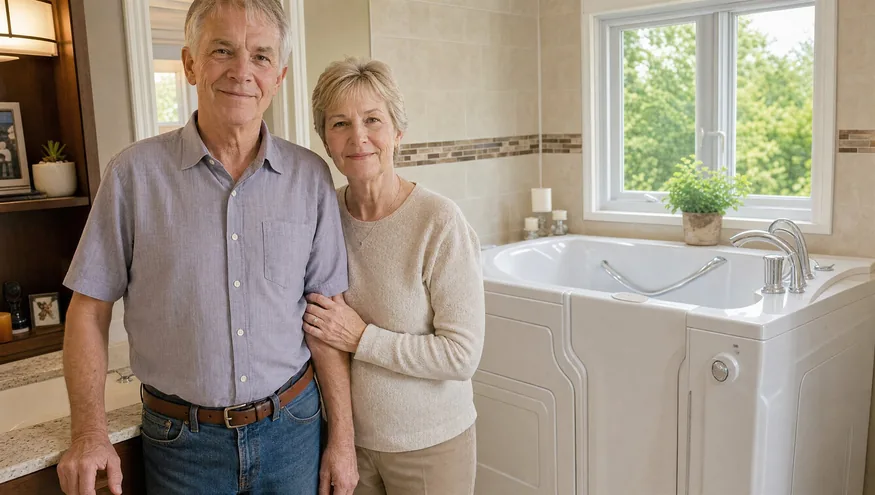
The bathroom is, statistically, the most dangerous room in an American home. Not the kitchen with its knives and heat. Not the stairs. The bathroom. The reason is mundane: hard surfaces, standing water, and, in most homes, a tub wall that asks a person to lift a leg some fifteen inches over a slick edge while balancing on the other foot.
What the standard tub asks of you
For a healthy adult in their forties, that climb is nothing, done a thousand times without a thought. For someone with arthritis, a recent hip replacement, failing balance, or simply eighty years behind them, it is the single riskiest movement of the day. Falls are the leading cause of injury among older Americans, and a meaningful share of them happen in exactly this spot: getting into or out of the tub. The danger is not dramatic. It is just always there, every morning.
What a walk-in tub changes
A walk-in tub is built around removing that climb. In place of a tall wall, it has a watertight door and a step-in threshold of just a few inches. Inside there is a built-in, contoured seat at chair height, so bathing happens sitting down. Grab bars are placed where a body actually reaches for them. The plumbing typically includes anti-scald protection and quick-fill, quick-drain valves. Many models add hydrotherapy jets, which are not a gimmick: warm, moving water genuinely eases arthritic joints and sluggish circulation.
The goal was never a fancier bath. It was one less reason to ever consider leaving the house.
Who it is really for
It is tempting to file a walk-in tub under "elderly," but that misses most of the people it helps. It is for the homeowner recovering from surgery who needs six months of safe bathing. It is for anyone whose arthritis has turned the morning routine into an ordeal. It is for the couple in their sixties who simply intend to grow old in this house, and would rather install the safety now, calmly, than after a fall. The industry calls this aging in place. In plain terms, it is staying put on your own terms.
The honest considerations
A walk-in tub is not without trade-offs, and a good specialist will say so. Because the door must be closed and sealed before filling, you sit in the tub while it fills, and again while it drains. Modern fast-fill and fast-drain systems shorten that wait considerably, but it exists. Installation is usually straightforward, often finished in a day or two within the footprint of your current tub. The door gasket needs occasional, simple care. None of this outweighs the core benefit, but you deserve to hear it before deciding.
A note on cost
Walk-in tubs are a real investment, and prices vary with the model and the bathroom. It helps to weigh that number against the alternative it is meant to prevent. A single month of assisted living often costs more than the tub does outright. Measured against the years of comfortable, independent living it can protect, many families find the math is not close.
Price a walk-in tub for your bathroom
A licensed local bath specialist will measure your space, recommend a model that fits, and give you real pricing for your exact bathroom, including financing if you want it. The in-home estimate is free, and nothing is decided until you decide it.
Request a free in-home estimateTakes about a minute to request. You set the pace from there.
Safety upgrades are easy to keep postponing, because the day you finally need them never quite feels like today. It is worth noticing that the homeowners who are glad they have a walk-in tub almost never say they installed it too soon.
USA Homeowner Guide is free for readers to use. When an article links to a contractor-matching service, we may be compensated by the contractor, never by you. Always confirm licensing and insurance and get written estimates before any work begins.