
How to Hire a Contractor Without Getting Burned
Most home-project regret traces back to the same short list of skipped steps.
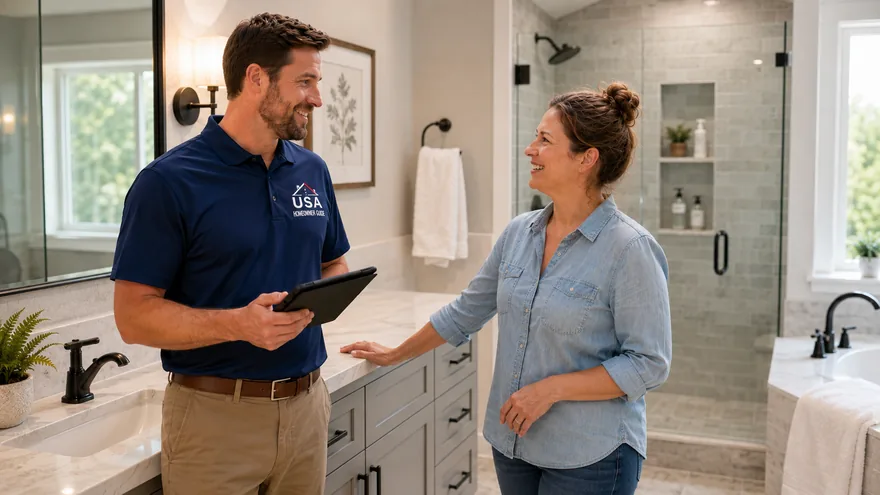
A good contractor turns a stressful project into a non-event. They show up, they do careful work, they clean up, and a few weeks later you have trouble remembering it was ever a disruption. A bad one turns the same project into a story you tell, with feeling, for years. The difference is decided mostly before anyone signs anything.
Here is the short list of steps that protect your money and your house. None of them are difficult. Skipping them is what most home-project regret has in common.
Before you sign
- Get three written quotes. Not to chase the lowest number, but to understand the work. The cheapest bid often quietly leaves something out; the highest is not automatically the best. Three quotes teach you what the job actually involves.
- Verify the license and insurance yourself. Do not take anyone's word for it. Most states offer an online license lookup. Ask for a current certificate of insurance. A contractor without liability and workers' compensation coverage is a contractor whose accidents can become your bill.
- Check recent work and call references. Ask for two or three recent customers, and actually call them. Was the project on time? Were there surprises? How was the cleanup? Would they hire this contractor again? Photographs of finished jobs help, too.
- Get everything in writing. The contract should spell out the full scope, the materials, a start date and a finish date, the total price, what happens if costs change, and the warranty. A handshake and a verbal number are not a contract. They are a misunderstanding waiting to happen.
- Understand the payment schedule. Never pay for the whole job upfront. A modest deposit, followed by payments tied to real milestones, is normal and fair. Be wary of anyone who wants most of the money before the work is meaningfully done, or who will only take cash.
The red flags
Most problem contractors show themselves early. Treat any of these as a reason to slow down:
- Pressure to decide today, or pricing that is only good "right now."
- Door-to-door solicitation, especially in the days right after a storm.
- No written contract, or a contract with vague scope and no firm dates.
- No verifiable physical address and no local track record.
- A request that you, the homeowner, pull the permits.
- A deposit that amounts to most of the project's total cost.
A reputable contractor will never need you to decide today.
A word on permits
Permits can feel like bureaucratic friction, but they exist to protect you. A permitted job is one an independent inspector has checked against code. If a contractor suggests skipping the permit to save a little time or money, hear that clearly: it is not a favor to you. It leaves the work unverified, and it can cause real trouble when you eventually sell the home. A contractor who intends to do the job right will want the permit too.
Hiring well is not about being an expert in roofs or plumbing or windows. It is about being unhurried, asking plain questions, and writing the answers down. Do that, and the work itself almost always takes care of itself.
USA Homeowner Guide is free to read. Our contractor-matching service supports the publication and is linked from some of our other articles; this guide carries no such link. It is here purely to be useful. Print it, post it, and put it to work.